
Marbella PGOM 2026: What It Means for Property Buyers
Marbella has approved its new PGOM. Discover what the 2026 urban plan means for property buyers, homeowners, investors, development land and Marbella real estate.
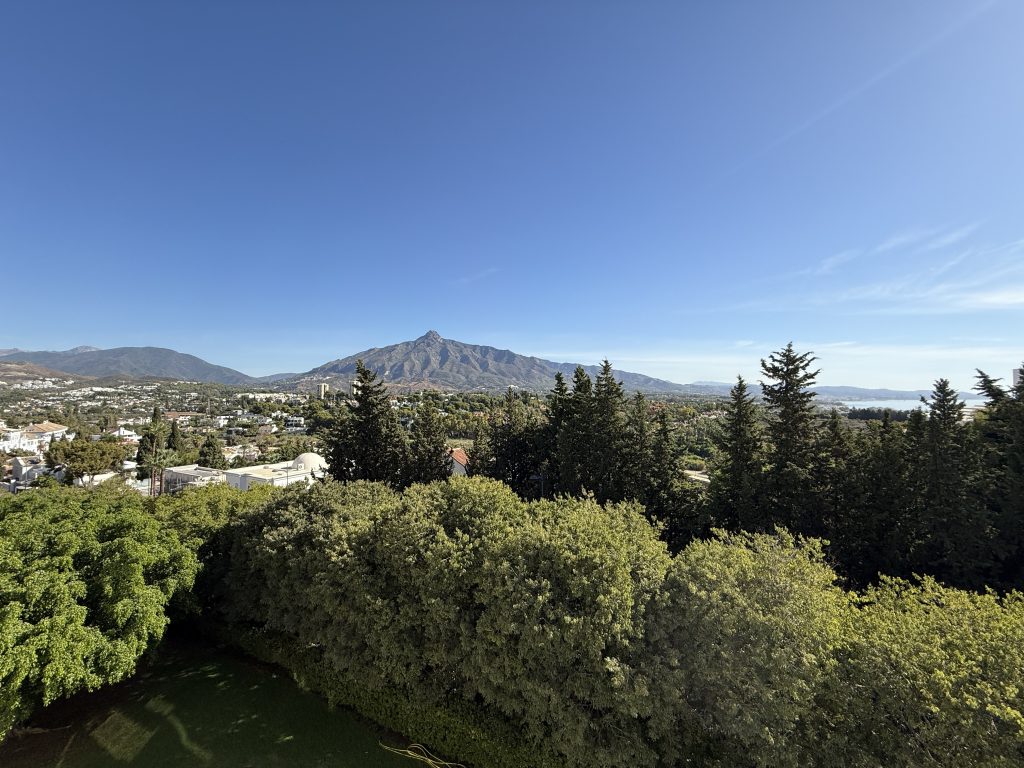
New Marbella PGOM 2026, What Does It Mean for Property Buyers, Owners and Investors?
Marbella has officially approved its new Plan General de Ordenación Municipal, PGOM, marking one of the most important changes to urban planning in Marbella in decades.
The new Marbella PGOM was definitively approved on 18 September 2026 and provides the city with a modern framework for its future growth and development. Until now, Marbella had largely been relying on an urban planning framework dating back to 1986.
A lot has changed in Marbella during those forty years.
New residential areas have been created, thousands of properties have been built, Marbella has developed into an internationally recognised luxury real estate destination and requirements regarding infrastructure, mobility, water, sustainability and public facilities have changed considerably.
The new PGOM aims to bring Marbella’s urban planning framework much closer to the city we know today, while also setting the direction for how Marbella can develop in the future.
For anyone considering buying property in Marbella, investing in Marbella real estate or looking at development opportunities and building land, understanding the new PGOM is increasingly important.
In this guide, we explain what the new Marbella PGOM is, what changes, how it differs from the POU, what it could mean for existing properties and development land and why it matters for the future of the Marbella real estate market.
Marbella PGOM 2026 at a glance
The most important points of the new Marbella urban plan are:
Definitively approved on 18 September 2026, giving Marbella a new general urban planning framework.
A move away from a planning framework dating back to 1986, bringing Marbella’s general planning into the current Andalusian planning system under LISTA.
Approximately 53 million m² of urban land, compared with around 40 million m² under the previous framework, according to Marbella Town Hall.
A new framework addressing the historic planning situation of approximately 18,000 properties, with the aim of providing greater legal certainty for good faith property owners.
Greater focus on sustainable growth, including infrastructure, mobility, water, green areas and public facilities.
The PGOM is not the final piece of the planning system, detailed urban planning is also being developed through the POU, Plan de Ordenación Urbana. Under LISTA, Marbella moves from one municipal planning instrument to two, the PGOM and POU.
The easiest way to understand the difference is:
PGOM = the strategic vision and general planning framework for Marbella
POU = the more detailed urban planning of the city
What is the Marbella PGOM?
PGOM stands for Plan General de Ordenación Municipal.
For international buyers, it can broadly be understood as Marbella’s new general urban development plan or strategic municipal planning framework.
It is sometimes referred to as Marbella’s new zoning plan or masterplan. These terms make the concept easier to understand internationally, although they are not exact legal equivalents of the Spanish planning system.
The PGOM establishes the general structure for how the municipality can develop.
It deals with matters including land classification, strategic development, major infrastructure, mobility, public facilities, environmental protection and the relationship between existing urban areas and potential future growth.
The official PGOM documentation is extensive and includes the planning regulations, cartography, environmental studies, mobility analysis, infrastructure requirements and maps showing changes to land classification.
However, the PGOM does not determine every detailed building rule for every individual plot in Marbella.
This is where the POU becomes important.
What is the difference between the Marbella PGOM and POU?
This distinction is essential for property buyers and investors.
The introduction of LISTA, Ley de Impulso para la Sostenibilidad del Territorio de Andalucía, changed the urban planning system in Andalusia.
Instead of relying on one main municipal planning instrument, the former PGOU system, Marbella’s new planning structure consists of two principal documents. The Marbella planning portal explicitly describes the transition from one municipal urban plan to two separate instruments, the PGOM and POU.
PGOM, Plan General de Ordenación Municipal
The PGOM establishes the general and strategic planning model for the entire municipality of Marbella.
It deals with the bigger picture.
Where can Marbella grow?
Which areas are urban and which remain rural?
How should major infrastructure and mobility be organised?
Which areas require environmental or other forms of protection?
POU, Plan de Ordenación Urbana
The POU Marbella, or Plan de Ordenación Urbana, deals with more detailed planning within the urban environment.
For someone investigating a particular property, development or plot, the POU can therefore become particularly relevant.
In simple terms:
The PGOM tells us where Marbella is heading.
The POU provides more detail about how its urban areas are organised.
The PGOM has now received definitive approval, while the POU follows its own planning procedure.
Why did Marbella need a new urban plan?
To understand the importance of the new PGOM, it helps to understand Marbella’s unusual planning history.
Marbella previously had a more modern urban plan, the PGOU 2010, but this was annulled. The city consequently returned to the PGOU approved in 1986.
The municipality itself has described that 1986 planning document as complex and outdated.
This created an unusual situation.
Modern Marbella bears little resemblance to Marbella in 1986.
Entire residential communities have been developed since then. The population has grown, international demand for property has increased substantially, new hotels, golf resorts and commercial areas have appeared and the requirements of the city have changed.
The Marbella of today requires infrastructure, mobility, water management, energy capacity and public services that could hardly have been anticipated four decades ago.
A modern Marbella urban planning framework was therefore increasingly important.
In February 2026, the Junta de Andalucía issued its favourable report on the final PGOM, allowing Marbella Town Hall to proceed towards definitive approval. The Junta described it as the first PGOM in Andalusia adapted to LISTA.
Marbella increases its recognised urban land to approximately 53 million m²
One of the headline changes is the amount of land classified as suelo urbano, or urban land.
According to Marbella Town Hall, the new PGOM recognises approximately 53 million m² of urban land, compared with around 40 million m² under the previous planning framework.
That represents a difference of approximately 13 million m².
For property investors and anyone researching urban land in Marbella, however, there is a crucial distinction to understand.
Urban land does not automatically mean immediately developable building land.
Land classification and the right to construct a specific project are not the same thing.
The development potential of a particular plot can depend on its detailed planning status, permitted use, infrastructure, environmental restrictions, sector specific regulations and further planning or administrative procedures.
For investors and developers, however, understanding these classifications and how particular areas fit into Marbella’s future planning model can be extremely valuable.
What does the new PGOM mean for approximately 18,000 properties with historic planning issues?
This is one of the most important parts of the new Marbella PGOM for existing homeowners and property buyers.
Marbella’s complicated planning history left approximately 18,000 homes affected by historic urban planning issues.
The new PGOM provides a planning framework intended to address these inherited situations and increase legal certainty, particularly for good faith property owners.
For the Marbella property market, this is significant.
However, it is important not to draw the wrong conclusion.
Does the new Marbella PGOM automatically legalise 18,000 properties?
No.
Approval of the PGOM does not mean that every property affected by a historic planning irregularity suddenly becomes fully legal.
The PGOM provides a new general planning framework.
The legal and planning status of an individual property still needs to be investigated separately.
When buying a property in Marbella, an independent Spanish lawyer should therefore continue to verify the legal and urban planning position of the specific property.
A new municipal planning framework should never be considered a substitute for proper legal and urban planning due diligence.
What does the new PGOM mean if you want to buy property in Marbella?
For most buyers, the property purchase process does not suddenly change because the PGOM has been approved.
Properties can continue to be bought and sold and the normal legal checks remain necessary.
The bigger change is strategic.
Marbella now has a modern general planning framework that provides more information about how the municipality intends to develop in the coming years.
For a property buyer, this highlights two important questions:
What am I buying today?
And:
What could happen around my property tomorrow?
Imagine buying an apartment because of its uninterrupted sea or golf views.
If undeveloped land directly in front of the property has future development potential, that may be relevant to your purchase decision.
The opposite can also be true.
Future infrastructure, improved accessibility or the development of a high quality residential area nearby could make a location more attractive.
This is why at Estagency we believe that property selection should go beyond the villa or apartment itself.
The location, surrounding land, infrastructure and future development of the area can all be relevant to a well informed property purchase.
Which areas of Marbella could be affected by the new PGOM?
The impact of Marbella’s future urban planning will not necessarily be the same everywhere.
Marbella contains mature residential neighbourhoods where relatively little undeveloped land remains, as well as locations where new development, infrastructure or redevelopment may play a larger role.
The significance of the PGOM should therefore always be considered at property and location level.
Nueva Andalucía
Nueva Andalucía is one of Marbella’s largest and most established residential areas.
Much of the area is already developed with villas, apartment communities and golf courses. Future planning can nevertheless remain relevant when considering undeveloped plots, infrastructure, public facilities and development surrounding existing properties.
Marbella Golden Mile
The Marbella Golden Mile is one of the most exclusive property markets in Southern Europe.
Land availability is limited and property values are high, which means changes to surrounding development or infrastructure can be particularly relevant to homeowners and buyers.
Sierra Blanca and Nagüeles
Sierra Blanca and Nagüeles are established prime residential areas above the Golden Mile.
Although both contain substantial existing development, planning remains relevant for individual plots, redevelopment opportunities, infrastructure and neighbouring land.
Marbella East, Río Real, Las Chapas and Elviria
Eastern Marbella combines established residential communities with new developments and areas of undeveloped land.
For buyers and investors looking at Marbella East property, understanding what exists today is therefore only part of the analysis. Future development of surrounding land can also be relevant.
None of this means that the PGOM automatically makes one area a better or worse investment.
Its impact must be assessed individually according to the location, property and applicable planning rules.
What does the Marbella PGOM mean for property investors?
For investors, the relevance of the new planning framework goes beyond existing homes.
The PGOM can help investors understand the strategic direction of Marbella and identify areas where future urban development, infrastructure or regeneration may occur.
Anyone considering property investment in Marbella should therefore look beyond today’s rental yield or purchase price.
Future development of the location can matter as well.
The official PGOM documentation contains detailed information and maps covering matters such as land classification, mobility, infrastructure demand, environmental considerations and protected areas.
This creates an additional layer of information for investors analysing Marbella real estate.
A location that appears relatively undeveloped today may occupy a very different strategic position within Marbella’s long term urban model.
However:
Future development potential is not the same as an immediate development right.
That distinction is particularly important when valuing land.
What does the PGOM mean for building land and property development in Marbella?
For developers and investors considering building land in Marbella, the new PGOM can be particularly relevant.
Land value is strongly influenced by what can legally and practically be developed.
Changes in classification, infrastructure or future development potential can therefore affect the strategic value of individual land holdings.
However, land appearing within an area of future development does not necessarily mean construction can begin immediately.
A proper development analysis can require examination of matters including land classification, permitted use, buildability, detailed planning, infrastructure requirements, public facilities, environmental restrictions and other sector specific regulations.
This distinction is important when considering development land for sale in Marbella.
If a seller states that land is developable under the new PGOM, this does not automatically answer three fundamental questions:
What can actually be built?
How many square metres can be built?
When can the development realistically proceed?
These questions require a plot specific urban planning analysis.
What does the PGOM mean for new developments in Marbella?
The new PGOM is also relevant to the future of new developments in Marbella.
New residential projects do not exist independently from the city around them.
Future growth needs to be considered alongside infrastructure, accessibility, water supply, energy, public facilities and green areas.
For buyers considering new build property in Marbella, it can therefore be useful to look beyond the development itself.
A development that feels relatively isolated today may eventually become part of a larger residential district.
Similarly, an apartment that currently enjoys completely open surroundings could be affected by future construction.
Understanding the wider planning context can therefore form an important part of the buying decision.
What happens while the POU is still being developed?
This is an important part of Marbella’s transition to the new planning system.
Approval of the PGOM does not mean that every detailed provision associated with the 1986 PGOU simply disappears at once.
The PGOM’s urban planning regulations contain transitional and final provisions governing the relationship with existing planning.
Marbella is therefore moving through a transition from the previous planning framework towards the new structure based on the PGOM and POU.
For more complex transactions, development sites and properties with historic planning issues, determining exactly which rules apply to a particular property remains essential.
Infrastructure and the future growth of Marbella
A city cannot continue to expand without its infrastructure developing alongside it.
This is particularly important in Marbella.
Future development has implications for roads, traffic, water supply, wastewater, electricity, public facilities and other essential infrastructure.
These subjects form part of the official PGOM documentation, which includes dedicated studies covering mobility and estimated infrastructure demand.
For future property development, this matters.
The theoretical ability to construct more homes is only one part of the equation.
The city also needs the infrastructure to support the people who will live in them.
Mobility and accessibility in Marbella
Accessibility is an important part of Marbella’s future.
Traffic congestion already affects certain locations and times of day, making mobility an increasingly relevant consideration as the municipality grows.
The PGOM documentation therefore considers mobility and connectivity as part of the wider planning framework.
From a real estate perspective, this can have both positive and negative effects.
Improved accessibility can make a residential area more attractive.
At the same time, major new infrastructure close to an individual property could change its surroundings.
For buyers, it is therefore worth considering not only how accessible a property is today, but also relevant future plans for the area.
Green spaces, nature and protecting Marbella’s quality of life
Marbella’s attraction is not based on property alone.
Its international appeal comes from the combination of the Mediterranean Sea, beaches, mountains, golf courses, climate, restaurants, international amenities and lifestyle.
The challenge is therefore not simply to allow Marbella to grow.
It is to accommodate growth while protecting the characteristics that make people want to live here in the first place.
The official PGOM documentation incorporates environmental assessment, protected assets, mobility, infrastructure and other considerations into the planning process.
For the long term Marbella real estate market, maintaining quality of life can be just as important as creating additional housing.
Marbella’s growth is about more than housing
A successful city requires more than homes and hotels.
As Marbella has evolved from primarily a tourism destination into a place where many international residents spend much of the year or live permanently, the requirements of the municipality have changed.
Schools, healthcare, sports facilities, shops, professional services, infrastructure, public spaces and mobility all contribute to the quality of a residential location.
The future of Marbella real estate therefore cannot be viewed separately from the future of the city itself.
Could the new PGOM affect Marbella property prices?
This is one of the most obvious questions for homeowners and investors.
There is no simple answer.
Approval of the new PGOM does not automatically mean that Marbella property prices will rise or fall.
Property values are influenced by many factors, including supply and demand, interest rates, international economic conditions, location, quality, new development supply and buyer demand.
Urban planning can, however, influence the attractiveness and development potential of individual locations.
If an area receives improved infrastructure, new amenities or high quality surrounding development, this could affect demand.
Conversely, new construction may also change existing views, traffic levels or the character of a neighbourhood.
When analysing Marbella property, it is therefore worth asking not only:
What is this property worth today?
But also:
How could this location change over the next five, ten or twenty years?
Is the new Marbella PGOM good news for the property market?
The new PGOM has several potential benefits from a real estate perspective.
Marbella now has a modern general planning framework that better reflects the city as it exists today.
It provides greater clarity about the municipality’s future spatial development.
It creates a new framework for addressing historic urban planning issues.
It places greater emphasis on coordinating future growth with infrastructure and services.
And it provides property owners, investors and developers with more information about the strategic direction of Marbella.
At the same time, more development potential does not mean that every future development will benefit every existing homeowner.
Additional construction can mean more housing and amenities, but it can also mean more traffic, changes to views or changes to the character of a particular location.
The actual impact therefore needs to be considered property by property and area by area.
What are the main points property buyers should remember?
There are four particularly important points.
First, the PGOM and POU are not the same thing. The PGOM provides the general strategic framework, while detailed urban planning is also addressed through the POU.
Second, suelo urbano does not automatically mean immediately developable land.
Third, the new PGOM does not automatically legalise every one of the approximately 18,000 properties affected by historic planning issues.
Fourth, Marbella is transitioning between planning frameworks, making property specific legal and urban planning due diligence particularly important in more complex cases.
What should you check before buying property in Marbella?
When buying real estate in Marbella, the legal and urban planning position of the property should always be investigated carefully.
This is particularly important when purchasing a detached villa, a large plot, a property that has been extended or renovated, land with development potential or a property with a complicated planning history.
The exact checks required depend on the property.
An independent Spanish lawyer and, where necessary, an architect or urban planning specialist can verify whether the physical property, licences, registrations and applicable planning regulations are consistent with one another.
The arrival of the new PGOM does not make due diligence less important.
For certain properties, the transition towards a new planning system makes understanding the applicable rules even more relevant.
Frequently Asked Questions about the Marbella PGOM
What does PGOM mean in Marbella?
PGOM stands for Plan General de Ordenación Municipal. It is the general strategic municipal planning instrument that establishes the broad urban and territorial planning framework for Marbella.
When was the new Marbella PGOM approved?
The Marbella PGOM received definitive approval on 18 September 2026. It is the first PGOM in Andalusia adapted to LISTA.
Does the new PGOM replace Marbella’s 1986 PGOU?
The new framework replaces the previous general planning model, while transitional provisions govern the relationship between the new PGOM and existing detailed planning. Property specific analysis may therefore still be required during the transition.
What is the difference between PGOM and POU in Marbella?
The PGOM establishes Marbella’s general strategic planning framework. The POU provides more detailed planning for the urban environment. LISTA changed Marbella’s planning system from one principal municipal plan to these two planning instruments.
Is Marbella’s POU already approved?
The POU follows a separate procedure from the PGOM. Buyers and investors should therefore check the current status and applicable detailed planning when analysing a specific property or development.
How much urban land is included in the new Marbella PGOM?
According to Marbella Town Hall, approximately 53 million m² is recognised as urban land under the new framework, compared with approximately 40 million m² previously.
Are the approximately 18,000 affected Marbella homes now legal?
Not automatically. The PGOM provides a new planning framework and aims to improve legal certainty, but the legal and planning status of an individual property still needs to be assessed separately.
Does suelo urbano mean I can build on a plot?
Not necessarily. Urban land classification does not automatically give an owner the right to build any proposed project. Detailed planning, permitted use, buildability, infrastructure, restrictions and licensing requirements can all be relevant.
Is the PGOM relevant when buying an apartment in Marbella?
Potentially, yes. For an apartment in a well established development, its direct impact may be more limited than for a large plot or development site. However, the PGOM can still be relevant when investigating what may happen on surrounding land.
Is the new PGOM important for Marbella property investors?
Yes, particularly for development land, redevelopment opportunities, new build projects and long term property investments. Understanding Marbella’s future planning direction can provide important context when assessing a location.
Can the PGOM affect the value of my Marbella property?
Potentially, but there is no automatic effect. Future infrastructure, amenities and surrounding development can influence the attractiveness of a location, while new construction can also affect views, privacy, traffic and the character of an area.
What does the new PGOM mean for the future of Marbella?
The definitive approval of the PGOM should not be seen as the end of Marbella’s urban planning process.
It marks the beginning of a new phase.
After relying for years on a general planning framework originating in 1986, Marbella now has a modern strategic plan within the current Andalusian planning system.
The next stages will be particularly interesting as this strategic vision is translated into more detailed urban planning and eventually into actual development.
For property owners, buyers and investors, this makes it increasingly important to look beyond the property itself and understand how its location could evolve.
Buying property in Marbella, look beyond the property itself
At Estagency, we believe good property buying advice goes further than finding a beautiful villa or apartment.
The property itself is obviously important.
But so are its location, legal status, surrounding land and the future development of the area.
When assisting buyers, we therefore look not only at the home they are buying today, but also at factors that may matter tomorrow.
The new Marbella PGOM makes that broader perspective increasingly relevant.
Because when you buy property in Marbella, you are not only buying a home. You are also buying into a location and the future of the city around it.
Considering buying property in Marbella? Estagency provides independent buyer representation throughout the purchase process, from identifying the right property and location to coordinating legal due diligence and completing the purchase.